Breaking Ground: Top Commercial Development Trends Across Michigan This Spring
Michigan's commercial real estate market is entering spring with strong momentum. Across the state, cities, are investing in mixed-use districts, downtown revitalization, infrastructure improvements, and large-scale redevelopment projects to attract businesses, residents, and talent. From Detroit to Grand Rapids to Lansing and Ann Arbor, the message is clear: Michigan is building for growth.
For investors, developers, and business owners, these trends create major opportunities in both established markets and emerging corridors. Here are some of the biggest commercial developments happening across Michigan right now.
1. Grand Rapids Continues Major Downtown Expansion
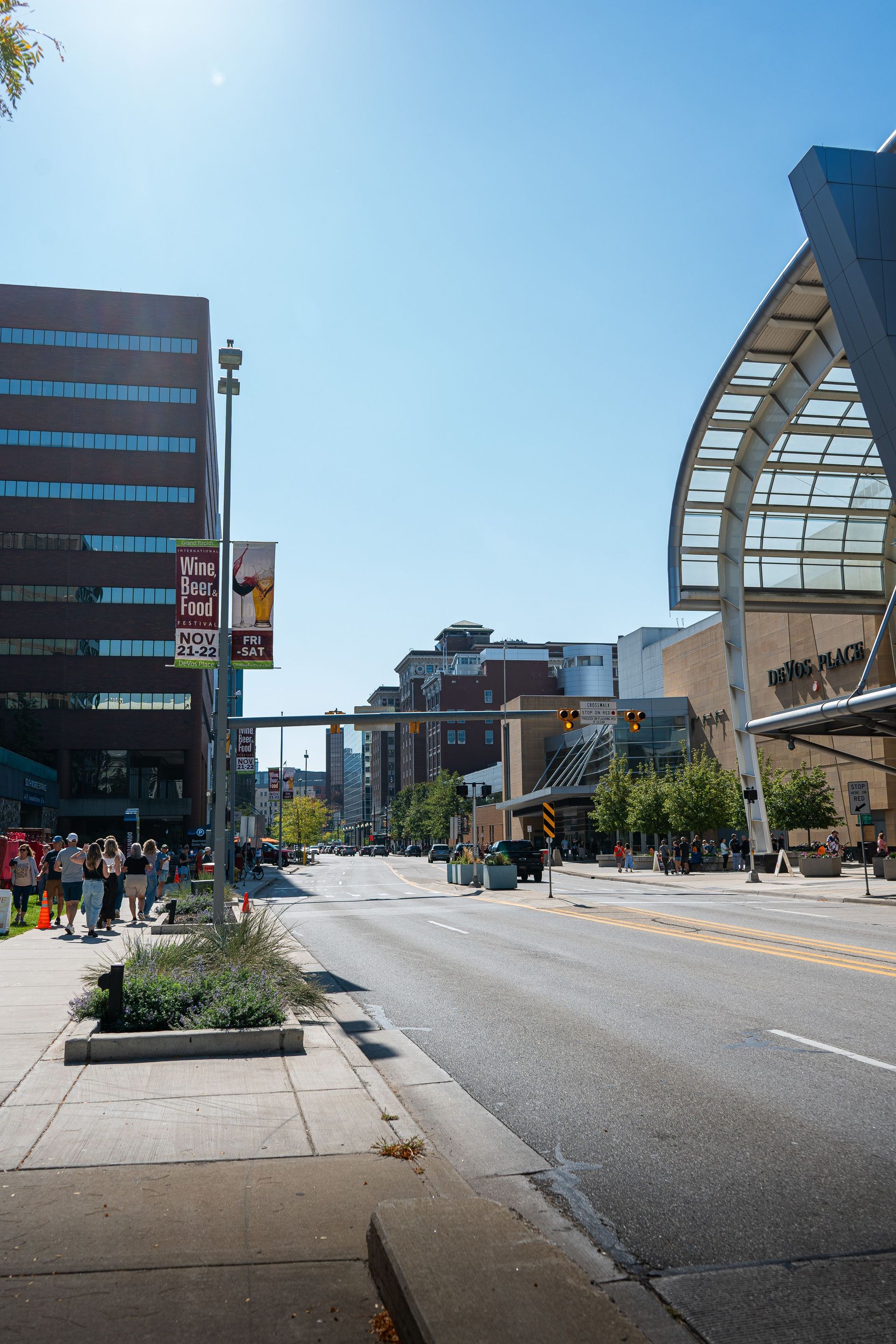
Grand Rapids remains one of Michigan’s hottest growth markets. A transformational Fulton & Market redevelopment project is expected to bring significant mixed-use density, new housing, commercial space, and activated riverfront areas to downtown. State officials noted this project alone represents hundreds of millions in investment.
The city is also seeing new neighborhood development in Boston Square, where a four-story mixed-use project will add apartments, commercial space, and public gathering areas.
Trend Insight: Grand Rapids continues proving that second-tier Midwest markets can drive large-scale commercial growth.
2. Lansing is Reinventing Its Downtown Core
Lansing is preparing for one of its most ambitious private developments in decades. The Tower on Grand project, part of a broader multi-site redevelopment, is planned as a 28-story mixed-use tower with residential, office, and retail uses. Additional projects and civic improvements are also reshaping downtown Lansing in 2026.
Trend Insight: State capitals with underutilized downtown space are becoming attractive redevelopment markets.
3. Ann Arbor Focuses on Density and Innovation Corridors
Ann Arbor remains one of the most desirable markets in Michigan thanks to the University of Michigan, tech growth, and strong demographics. New high-rise residential and mixed-use developments near campus continue moving forward, while large-scale proposals like Arbor South point toward expanded commercial nodes outside the traditional downtown core.
Trend Insight: Markets anchored by universities continue generating demand for office, retail, hospitality, and multifamily development.
4. Detroit Keeps Expanding Through Mixed-Use and Infill Growth
Detroit’s core has seen sustained momentum through large-scale downtown investment, hospitality growth, adaptive reuse, and infill development. Community discussion continues around the need for more mid-rise projects and neighborhood-fill development to complement headline skyscraper projects.
Trend Insight: Detroit’s next chapter may be less about landmark towers and more about block-by-block commercial growth.
5. Smaller Michigan Communities Are Growing Too
Commercial development isn’t limited to major metros. Communities like Saline, Holly, and Utica are receiving state support for downtown redevelopment, commercial rehabilitation, and placemaking projects that help local business districts thrive.
Trend Insight: Smaller markets with strong local identity are becoming increasingly attractive for retail, office, and service businesses.
What This Means for Investors and Businesses
Spring 2026 shows a Michigan market driven by:
- Mixed-use development
- Walkable downtown districts
- Adaptive reuse of older buildings
- Talent-focused placemaking
- Growth beyond the largest metro cores
- Demand for retail and service users near new housing
Michigan is no longer a wait-and-see market. It is an active growth market with expanding commercial opportunities across multiple regions. Whether you are investing, leasing, or planning your next project, timing matters.
At Bransco Properties MI, we help businesses and investors identify where Michigan growth is happening next.